 Castello Utveggio
Michele Utveggio
Born in Calatafimi in 1866 and moved to Palermo as a young man, Michele Utveggio became in the 1920s one of the city's leading building entrepreneurs. Together with his nephew and partner Collura he helped build modern Palermo: part of via Libertà, the Matteotti district, the Favorita stadium. He was also president of Palermo Calcio from 1923 to 1925.
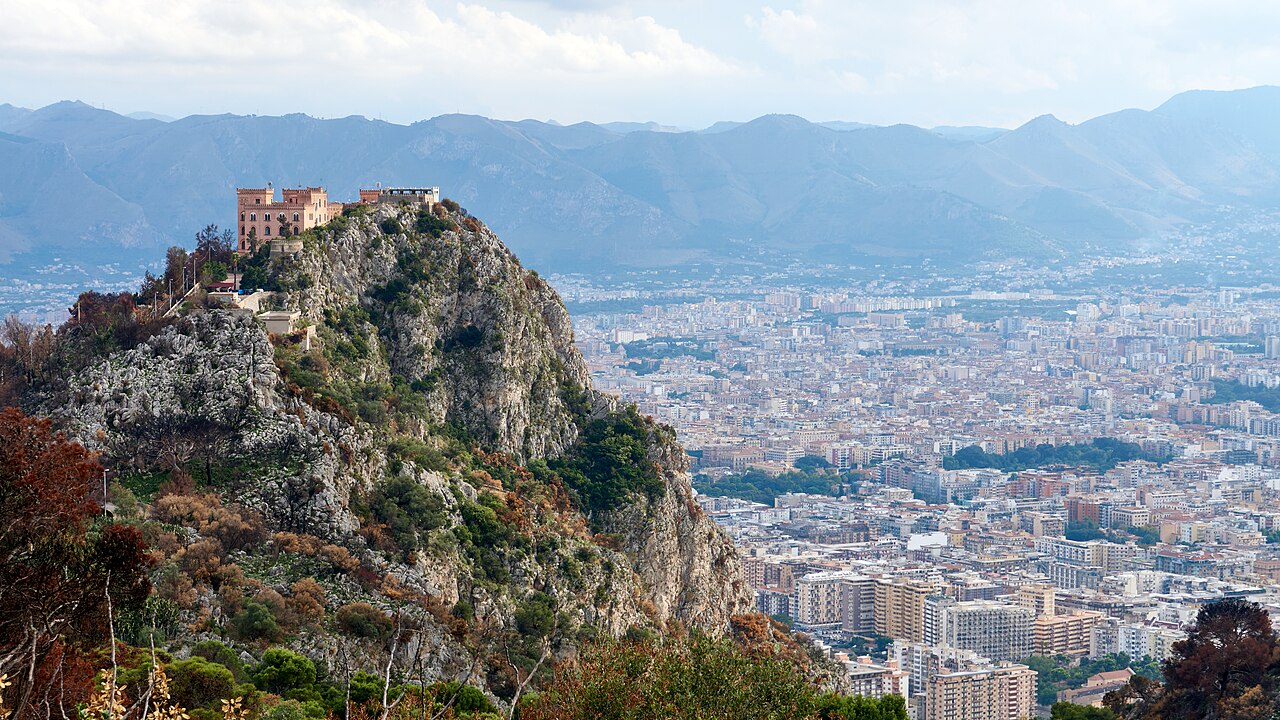
The idea of the castle came from a window: from his penthouse opposite the Teatro Massimo, Utveggio looked towards the first peak of Monte Pellegrino and imagined a place suspended above the city.
A castle in five years
The land was purchased in 1927. The project was designed by the architect Giovan Battista Santangelo and built by the Collura-Utveggio company. To make room for the building, 40,000 cubic metres of rock were excavated, creating six hectares where a small self-sufficient world took shape: a nursery, a vegetable garden, greenhouses, stables, a sheepfold, a henhouse and beehives.
There were also advanced solutions, such as the purification and reuse of wastewater. Utveggio even dreamed of a cable car, which was rejected: he then built the road that still climbs up here today.
The inauguration he never saw
Works were completed in 1933. On 5 March of that year, aged 67, Michele Utveggio died: he would never see his castle inaugurated. In 1934 the Grand Hotel Castello Utveggio opened, with 55 beds in rooms and suites overlooking Palermo, furnished with luxury furniture, porcelain, crystal and works of art.
A history in stages
- 1927
Purchase of the land on Monte Pellegrino.
- 1934
Inauguration of the Grand Hotel Castello Utveggio.
- 1938
With the war the hotel closes: the castle becomes a German air force command centre and an anti-aircraft outpost. After 1943 American troops arrive.
- Post-war
Years of abandonment, interrupted in the 1960s by a summer camp on the ground floor.
- 1984
The Sicilian Region acquires the complex and begins its restoration.
- 1988
It becomes the seat of Cerisdi, a centre for advanced management training.
- 1995
In November 1995 Pope John Paul II stays here, in Palermo for the Third Convention of the Churches of Italy.
- 2013
Cerisdi closes due to financial difficulties.
- 2023
On 7 September a resolution includes it among the Presidential sites of the Sicilian Region.
- 2024
In August renovation and modernisation works begin, designed by architect Francesco Di Chiara.
The castle today
The castle is today an outstanding congress centre. On the ground floor are the 160-seat hall, once the ballroom, and the Gallery of the Presidents, with portraits of all the Presidents of the Sicilian Region since 1946. The upper floors host further rooms, a press room and a state-of-the-art control room; on the third floor two rooms recreate the original atmosphere of the hotel.
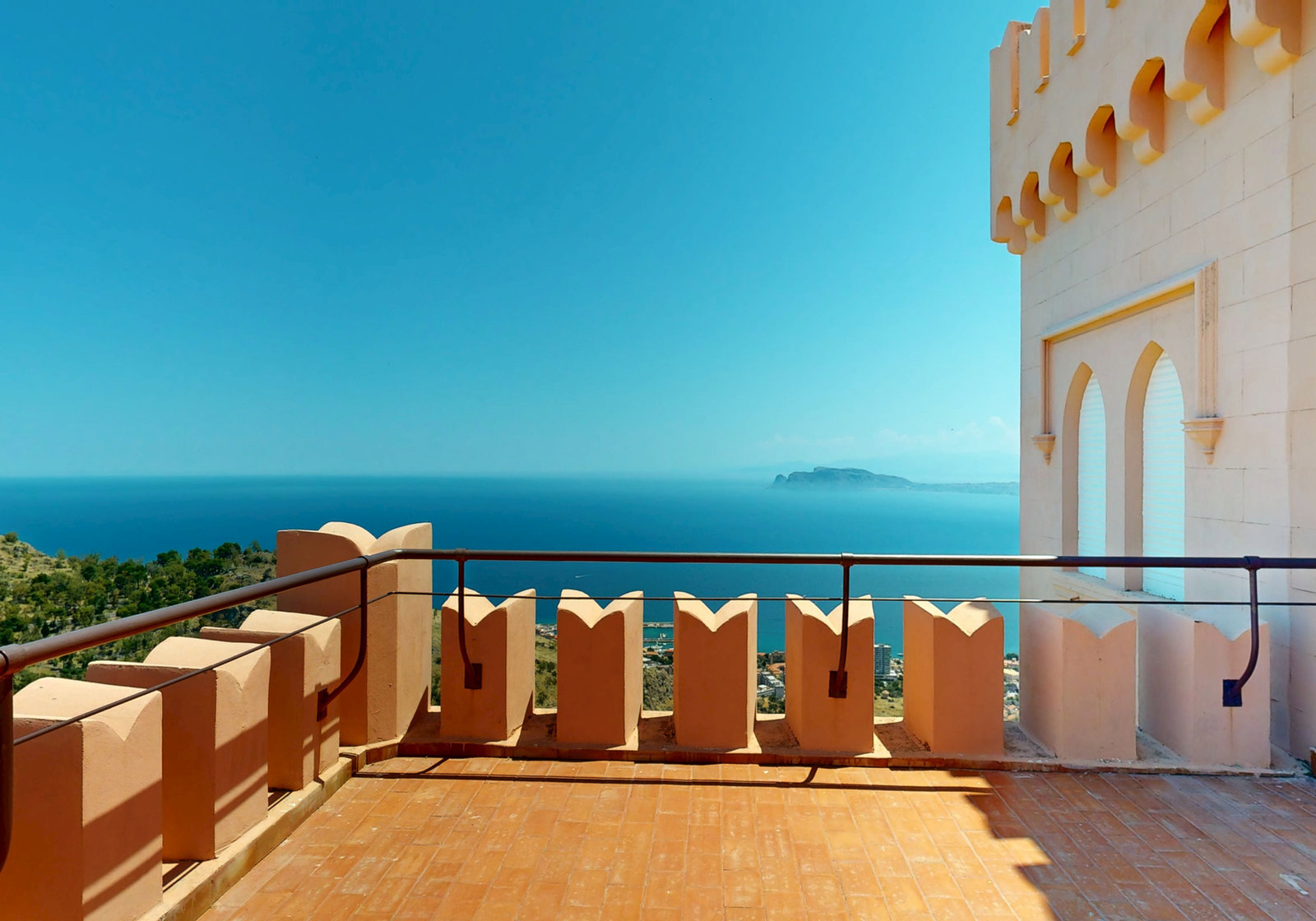
Two panoramic lifts make every floor accessible to everyone. On the fourth floor, the terrace offers a 360-degree view over Palermo, the sea and the Conca d'Oro, from the promontory that Goethe called the most beautiful in the world.
Michele Utveggio never saw his castle open. Today, anyone who climbs up here sees what he had imagined.